Introduction
If you’re feeling stressed, tired, or stuck in a cycle of cravings, a cortisol-lowering meal plan can help bring some calm back into your day. The goal isn’t dieting or restriction. It’s about steady energy, balanced blood sugar, and regular meals that help your body feel safe instead of stressed.
This beginner-friendly plan shows what a full day and a simple week might look like, along with prep time, approximate calories, and why each meal supports cortisol balance. Everything is realistic, affordable, and flexible.
For the bigger picture,
More details on cortisol diet principles in: Cortisol Diet Guide: How to Lower Stress Hormone Naturally with Food.
How This Meal Plan Supports Cortisol Balance
Each meal focuses on:
- Protein to prevent blood sugar crashes
- Complex carbohydrates for steady energy
- Fiber and healthy fats to slow digestion
- Regular timing to avoid stress signals
You don’t need perfection. Consistency matters more.
One-Day Sample Cortisol-Lowering Meal Plan
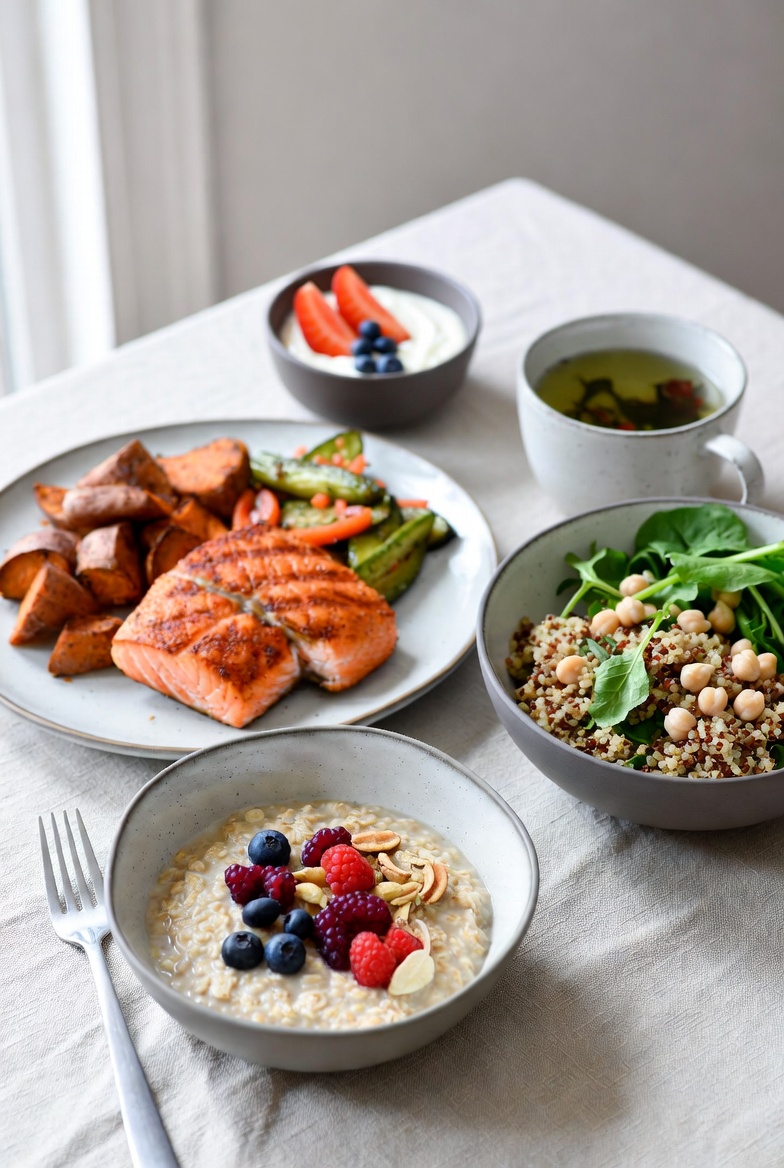
Breakfast: Oatmeal with Berries and Nuts
Calories: ~350
Prep time: 10 minutes
What to eat:
- Rolled oats cooked with milk or water
- Blueberries or strawberries
- Almonds or walnuts
Why it helps:
Oats provide slow-digesting carbs, while nuts add healthy fats and protein. This helps prevent a mid-morning cortisol spike.
Mid-Morning Snack: Yogurt and Fruit
Calories: ~200
Prep time: 5 minutes
What to eat:
- Greek yogurt (plain)
- One small apple or berries
Why it helps:
Protein plus fiber keeps blood sugar steady and reduces stress-driven cravings.
Lunch: Chicken, Quinoa, and Veggie Bowl
Calories: ~450
Prep time: 15–20 minutes
What to eat:
- Grilled or baked chicken
- Quinoa or brown rice
- Roasted or steamed vegetables
- Olive oil drizzle
Why it helps:
This balanced meal delivers protein, complex carbs, and fiber—all key for keeping cortisol from rising after lunch.
Afternoon Snack: Apple with Nut Butter
Calories: ~180
Prep time: 5 minutes
What to eat:
- One apple
- 1–2 tablespoons peanut or almond butter
Why it helps:
This combo prevents the late-afternoon energy crash that often triggers stress eating.
Dinner: Salmon, Sweet Potato, and Greens
Calories: ~500
Prep time: 25 minutes
What to eat:
- Baked salmon
- Sweet potato
- Spinach or broccoli
Why it helps:
Omega-3 fats from salmon support stress balance, while complex carbs help cortisol wind down in the evening.
Optional Evening Snack: Herbal Tea + Dark Chocolate
Calories: ~100
Prep time: 5 minutes
Why it helps:
Herbal tea supports relaxation, and a small amount of dark chocolate satisfies cravings without spiking blood sugar.
Simple 5-Day Beginner Meal Plan (Mix & Match)
Breakfasts
- Oatmeal with nuts and fruit
- Eggs with whole-grain toast and veggies
- Yogurt with seeds and berries
Lunches
- Grain bowls with chicken or beans
- Leftover salmon and vegetables
- Lentil soup with whole-grain bread
Dinners
- Stir-fry with tofu or chicken and brown rice
- Baked fish with roasted vegetables
- Turkey chili with beans
Snacks
- Fruit + nuts
- Yogurt
- Hummus + veggies
Repeat meals as needed—routine helps cortisol.
Beginner-Friendly Shopping List
Proteins
- Chicken breast
- Salmon or canned fish
- Eggs
- Greek yogurt
- Beans or lentils
Carbohydrates
- Rolled oats
- Brown rice or quinoa
- Sweet potatoes
- Whole-grain bread
Fruits & Vegetables
- Berries
- Apples
- Spinach or kale
- Broccoli
- Bell peppers
Fats & Extras
- Olive oil
- Nuts and seeds
- Nut butter
- Herbal teas
Time-Saving Tips for Busy Weeks
- Cook grains in bulk once or twice a week
- Use frozen vegetables to save prep time
- Double dinner recipes for next-day lunches
- Keep snacks simple and repeatable
Lower stress often comes from less decision-making, not more.
Frequently Asked Questions
Do I need to follow this meal plan exactly?
No. Use it as a template. Swap foods based on taste, budget, or availability.
How many calories should I eat?
Calorie needs vary. Focus on balanced meals and regular eating rather than strict numbers.
Can I eat carbs at night?
Yes. Complex carbs at dinner may actually help cortisol levels drop in the evening.
What if I don’t like cooking?
Choose simple meals, pre-cooked proteins, or basic combinations like yogurt, fruit, and nuts.
How soon can this help stress?
Some people notice steadier energy and fewer cravings within a few days.
Final Thought
A cortisol-lowering meal plan isn’t about control—it’s about support. When your body is fed regularly and gently, stress hormones don’t need to work as hard.
Start with one meal. One day. One small shift. That’s more than enough to begin.
